
Expert Insights on DOT Compliance
In-depth analysis, regulatory updates, and practical compliance guidance from transportation attorneys and industry experts.

Dalilah's Law: What Fleets Need to Know About the Proposed CDL Restrictions
Senator Jim Banks has introduced the Dalilah Law, a bill that would prohibit states from issuing CDLs to individuals who are not U.S. citizens, lawful permanent residents, or holders of certain work visas — and tie compliance to federal DOT funding. Here's what fleet owners and safety directors need to know.
 Brandon Wiseman
FMCSA Issues Final Rule on Non-Domiciled CDLs
The Federal Motor Carrier Safety Administration (FMCSA) has issued a new final rule on non-domiciled Commercial Learner’s Permits (CLPs) and Commercial Driver’s Licenses (CDLs). Scheduled for publication in the Federal Register on February 13, 2026 (Docket No. FMCSA-2025-0622, RIN 2126-AC98), this rule largely reaffirms the provisions of the September 29, 2025, Interim Final Rule (IFR) with minor clarifications, despite intense legal scrutiny, a court-imposed stay, and thousands of public commen
Brandon Wiseman
FMCSA Modifies Temporary Waiver for Paper Medical Certificates Amid NRII Transition
According to a notice published August 21, 2025, the Federal Motor Carrier Safety Administration (FMCSA) has modified its temporary waiver, allowing interstate commercial driver’s license (CDL) and commercial learner’s permit (CLP) holders, as well as motor carriers, to use paper Medical Examiner’s Certificates (MECs) as proof of medical certification for up to 60 days after issuance. This waiver, effective until October 12, 2025, addresses ongoing challenges in the transition to the National Re
Brandon Wiseman
FMCSA Issues Temporary Waiver for NRII Transition, Easing CDL Medical Certification Delays for Motor Carriers and Drivers
Coming on the heels of a rocky transition to the new fully-electronic process for CDL medical certifications, the Federal Motor Carrier Safety Administration (FMCSA) has announced a temporary waiver for CDL drivers and the motor carriers that employ them. This FMCSA waiver addresses potential delays in the electronic transmission of DOT medical exam results stemming from medical examiners or state drivers licensing agencies (SDLAs) who weren't prepared for this long awaited change, ensuring that
Brandon Wiseman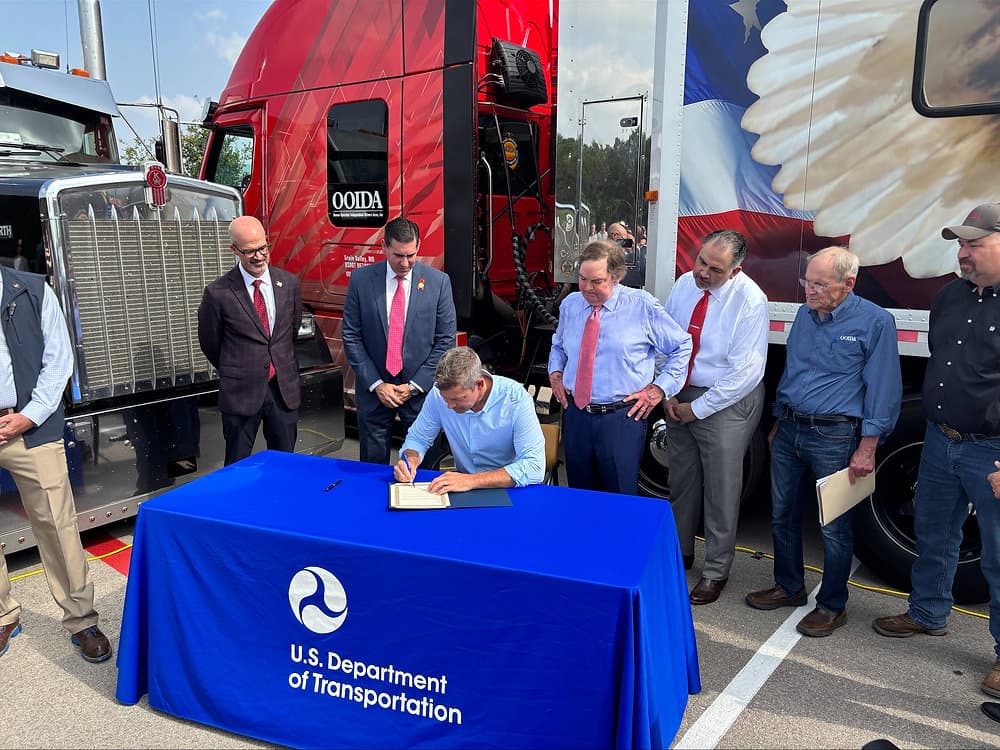
FMCSA issues enforcement policy on English proficiency
On May 20, 2025, the Federal Motor Carrier Safety Administration (FMCSA) issued its much anticipated Enforcement Policy on English language proficiency (ELP) requirements for commercial motor vehicle (CMV) drivers. Prompted by Executive Order 14286, signed by President Trump on April 28, 2025, and titled “Enforcing Commonsense Rules of the Road for America’s Truck Drivers,” this guidance, effective as of May 20, 2025, aims to guide law enforcement in their application of the ELP requirement in 4
Brandon Wiseman
FMCSA to void over 15,000 driver med cards and remove non-compliant medical examiners from National Registry
On April 11, 2025, the U.S. Department of Transportation (USDOT), through the Federal Motor Carrier Safety Administration (FMCSA), has proposed the removal of two Houston-area medical examiners from the National Registry of Certified Medical Examiners (NRCME) for failure to properly perform physical qualification exams required for commercial motor vehicle (CMV) drivers. This move, which impacts over 15,000 drivers, underscores the agency’s commitment to ensuring only qualified professionals par
Brandon Wiseman
DOT Compliance for Small vs. Large Fleets
In the U.S. trucking industry, fleet managers, regardless of fleet size, face a myriad of challenges to ensure their business remains compliant with USDOT regulations. However, the scope and scale of these challenges can differ significantly depending on the size and complexity of the fleet. In this article, we'll explore the key differences in DOT compliance between small and large fleets, identify common challenges, and provide practical strategies for each to stay compliant. The Basics of DOT
Brandon Wiseman
Combating distracted driving & crafting an effective policy
Distracted driving is a major problem in the U.S., and its dangers are magnified in the trucking industry. It's no surprise that a commercial driver's inattention for even a few seconds can result in catastrophic accidents. For fleet managers, the stakes are high: distracted driving can lead to increased insurance premiums, legal liabilities, operational disruptions, and tragically, loss of life.In 2022, the National Highway Traffic Safety Administration (NHTSA) reported 3,308 deaths due to dist
Brandon Wiseman
Qualification considerations for multiple-employer drivers
In other articles, we've harped on the importance of thoroughly vetting commercial drivers. Missteps in the qualification process regularly contribute to high CSA scores, downgraded safety ratings, and nuclear verdicts. Part 391 of the Federal Motor Carrier Safety Regulations, and related state rules, lay out the steps regulated carriers must follow when qualifying new drivers. Driver applications, previous employer safety performance history requests, motor vehicle reports (MVRs), and road test
Brandon WisemanNever Miss an Update
Get in-depth DOT compliance articles and breaking regulatory news delivered right to your inbox
Join thousands of safety professionals staying informed on DOT compliance