
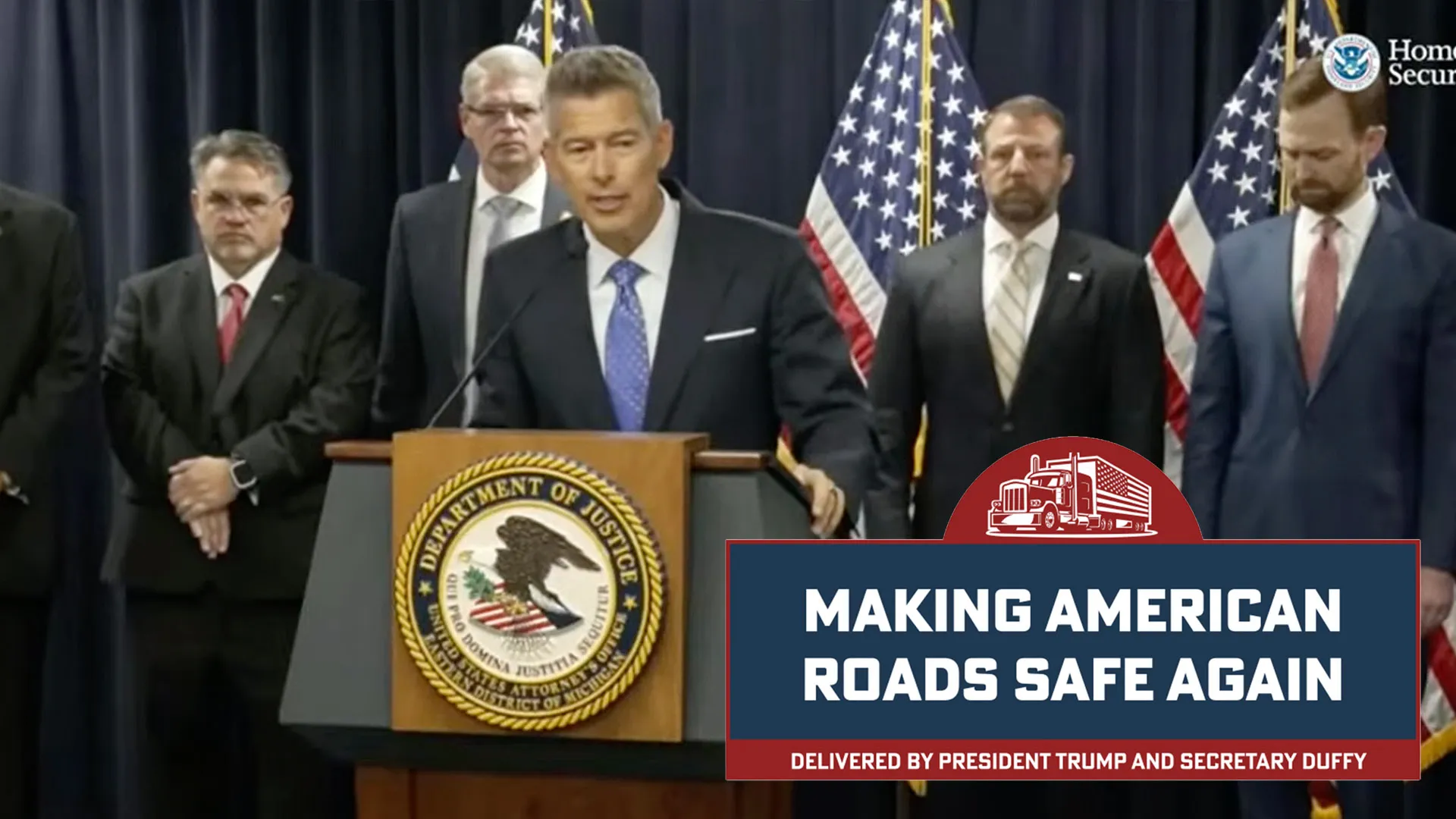
Federal Government Launches Historic Interagency Crackdown on CDL Fraud in Trucking
The U.S. Departments of Transportation, Homeland Security, and Justice have launched a historic interagency crackdown on CDL fraud, including emergency removal of 110+ training providers, a 40-state investigation, and formation of the Joint Task Force Crossroads of America. Here's what it means for compliant carriers.
 Brandon Wiseman
States Sue FMCSA Over CDLIS Data Demand
Twenty-two states and D.C. have sued FMCSA over a demand for 17 million CDLIS driver records, threatening to shut down CDL issuance nationwide. Here's what the lawsuit means for your fleet and what to watch next.
Brandon Wiseman
FMCSA Proposes to Codify English Language Proficiency as an Out-of-Service Violation
FMCSA has proposed a rule that would formally codify English Language Proficiency (ELP) as an out-of-service violation under 49 CFR 391.11(b)(2). Here's what the NPRM means for your fleet and what you need to be doing right now.
Brandon Wiseman
What SCOTUS’s Montgomery Decision Means for Carriers
The Supreme Court's unanimous ruling in Montgomery v. Caribe Transport II, LLC means freight brokers can now be sued for negligent hiring under state law — and your CSA BASIC scores and safety rating are the evidence. Here is what every motor carrier needs to know and do now.
Brandon Wiseman
FMCSA to withhold $73M in federal funds from New York
FMCSA withheld $73.5 million from New York after auditors found a 53% failure rate in non-domiciled CDL issuances. Here is what that audit means for your driver qualification files and what you need to do under 49 CFR Part 391.
Brandon Wiseman
Iowa English Proficiency Law Progresses Through State Legislature: What SF 2426 Means for Carriers
Iowa Senate File 2426 would establish one of the nation's first comprehensive state-level English proficiency requirements for CDL applicants, with carrier penalties up to $10,000 per violation. Here's what Iowa carriers need to know now.
Brandon Wiseman
Indiana Revokes Nearly 1,800 Non-Domiciled CDLs Under New State Law
Indiana revoked 1,790 non-domiciled CDLs under new state law, establishing precedent for nationwide enforcement with $50,000 employer penalties and felony charges.
Brandon Wiseman
CVSA's 2026 International Roadcheck Targets ELD Tampering During May 12-14
CVSA's 2026 International Roadcheck (May 12-14) focuses on ELD tampering enforcement with enhanced penalties up to $16,000 per violation and automatic 10-hour out-of-service orders for tampering violations.
Brandon Wiseman
California to Cancel 13,000 Non-Domiciled CDLs
Following a federal audit and regulatory enforcement action by the Federal Motor Carrier Safety Administration (FMCSA) and the U.S. Department of Transportation, the California Department of Motor Vehicles (DMV) has begun canceling thousands of previously issued non-domiciled CDLs after federal officials concluded that many of the licenses were issued in violation of federal eligibility requirements.The situation illustrates a broader regulatory shift occurring at the federal level regarding non
Brandon WisemanNever Miss an Update
Get in-depth DOT compliance articles and breaking regulatory news delivered right to your inbox
Join thousands of safety professionals staying informed on DOT compliance