

Dalilah's Law: What Fleets Need to Know About the Proposed CDL Restrictions
Senator Jim Banks has introduced the Dalilah Law, a bill that would prohibit states from issuing CDLs to individuals who are not U.S. citizens, lawful permanent residents, or holders of certain work visas — and tie compliance to federal DOT funding. Here's what fleet owners and safety directors need to know.
 Brandon Wiseman
FMCSA Issues New Guidance Clarifying Non-Domiciled CDL Final Rule Requirements
On February 18, 2026, FMCSA issued new Frequently Asked Questions (FAQs) clarifying its recently finalized rule tightening the issuance of non-domiciled commercial driver’s licenses (CDLs). The guidance provides critical details for states, carriers, and drivers navigating the March 16, 2026 effective date of the final rule, and confirms that the agency is taking an aggressive posture toward enforcing lawful presence requirements and correcting past licensing deficiencies. While much of the atte
Brandon Wiseman
Compliance Theater: When Documentation Replaces Judgment
Many fleets are proud of their documentation. They document driver qualification. They document training. They document inspections, audits, incidents, and corrective actions. They keep complete driver files, run required reports, and maintain records they can be produced quickly when requested. Internally, that documentation often becomes a source of confidence. The thinking goes, if something goes wrong, the paperwork will show we did what we were supposed to do.That belief is understandable.
Brandon Wiseman
Compliance Theater and the Illusion of Protection
In trucking litigation, safety programs often become evidence. This article explores “compliance theater,” where check-the-box compliance creates records but fails to control risk.
Brandon Wiseman
CVSA Human Trafficking Awareness Week and What Your Drivers Need to Know
Today through January 16, the Commercial Vehicle Safety Alliance is running its annual Human Trafficking Awareness Initiative across the United States. Law enforcement agencies are conducting outreach at truck stops and weigh stations. Motor carrier officers are handing out materials during roadside inspections. And your drivers are being asked to step up.This is not just an awareness campaign. This is a compliance and safety issue that every fleet should be taking seriously.The Numbers You Need
 Rob Carpenter
Top 10 Regulatory Developments Fleets Should Understand Heading Into 2026
If 2024 hinted at regulatory turbulence, 2025 made it impossible to ignore. Over the past year, FMCSA and USDOT unleashed the most aggressive series of compliance initiatives in more than a decade—targeting language proficiency, non-domiciled CDL issuance, electronic logging devices, medical certification, training quality, and core data systems. These moves were not isolated events; collectively, they signaled a larger shift toward enforcement-first policymaking and heightened scrutiny on found
Brandon Wiseman
FMCSA Cleans House: 3,000 CDL Schools Removed from the Training Provider Registry
The Federal Motor Carrier Safety Administration (FMCSA) took long-overdue action this week to clean up the nation’s CDL training landscape. Transportation Secretary Sean Duffy announced that nearly 3,000 training providers have been removed from the federal Training Provider Registry (TPR), and another 4,500 have been placed on notice for noncompliance.That’s 7,500 providers—roughly 17% of the registry—flagged in one sweep. The scale of the problem raises the obvious question: If these providers
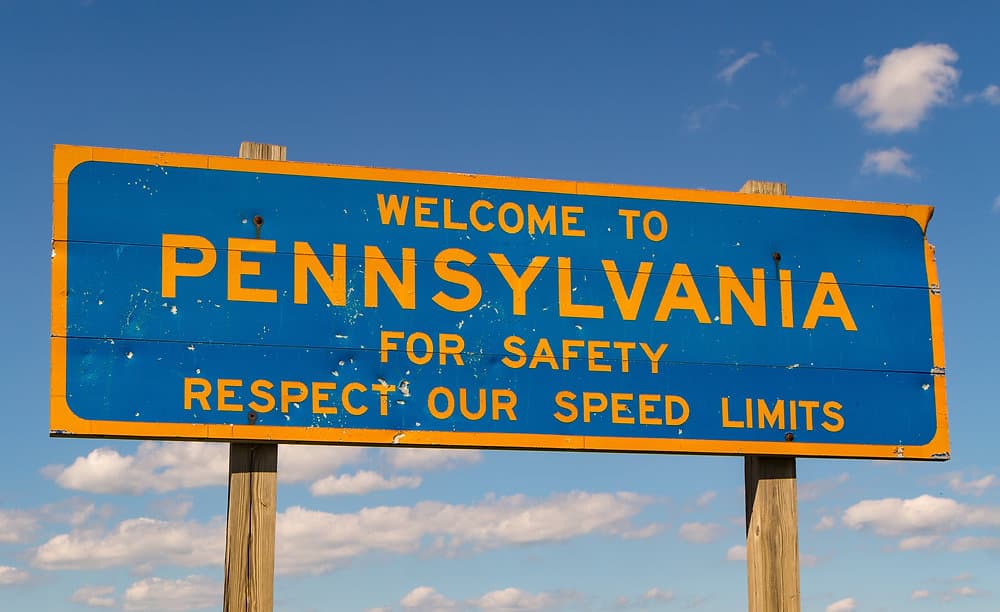
FMCSA Flags Pennsylvania for Non-Domiciled CDL Irregularities
FMCSA has once again turned its attention to state-level CDL practices, this time issuing a pointed preliminary determination of substantial noncompliance to the Commonwealth of Pennsylvania over how it has been issuing non-domiciled commercial learner’s permits (CLPs) and CDLs. The nine-page letter, dated November 19, 2025, reads as both a technical audit and a warning shot, signaling that the Agency’s scrutiny of lawful-presence verification and non-domiciled credentialing practices is expandi
Brandon Wiseman
FMCSA Tightens Rules for Non-Domiciled CDLs in Wake of Fatal Crashes
The Federal Motor Carrier Safety Administration (FMCSA) has issued an Interim Final Rule (IFR) to tighten the the rules governing the issuance of commercial learner’s permits (CLPs) and commercial driver’s licenses (CDLs) to individuals domiciled outside the United States. The rule, which takes effect immediately upon publication in the Federal Register, represents one of the most significant shifts in driver-credentialing policy in recent memory. FMCSA says the move is necessary to “restore int
Brandon WisemanNever Miss an Update
Get in-depth DOT compliance articles and breaking regulatory news delivered right to your inbox
Join thousands of safety professionals staying informed on DOT compliance