

FMCSA Cleans House: 3,000 CDL Schools Removed from the Training Provider Registry
The Federal Motor Carrier Safety Administration (FMCSA) took long-overdue action this week to clean up the nation’s CDL training landscape. Transportation Secretary Sean Duffy announced that nearly 3,000 training providers have been removed from the federal Training Provider Registry (TPR), and another 4,500 have been placed on notice for noncompliance.That’s 7,500 providers—roughly 17% of the registry—flagged in one sweep. The scale of the problem raises the obvious question: If these providers

FMCSA to tighten ELD self-certification process
The Federal Motor Carrier Safety Administration has announced a significant shift in how it evaluates and approves Electronic Logging Devices (ELDs), marking the most substantial change to the approval process since the ELD mandate first took effect. While the agency continues to stop short of a full third-party certification program—similar to the one now used in Canada—its move toward a more structured, hands-on vetting approach signals a notable evolution in federal oversight of the ELD marke
 Brandon Wiseman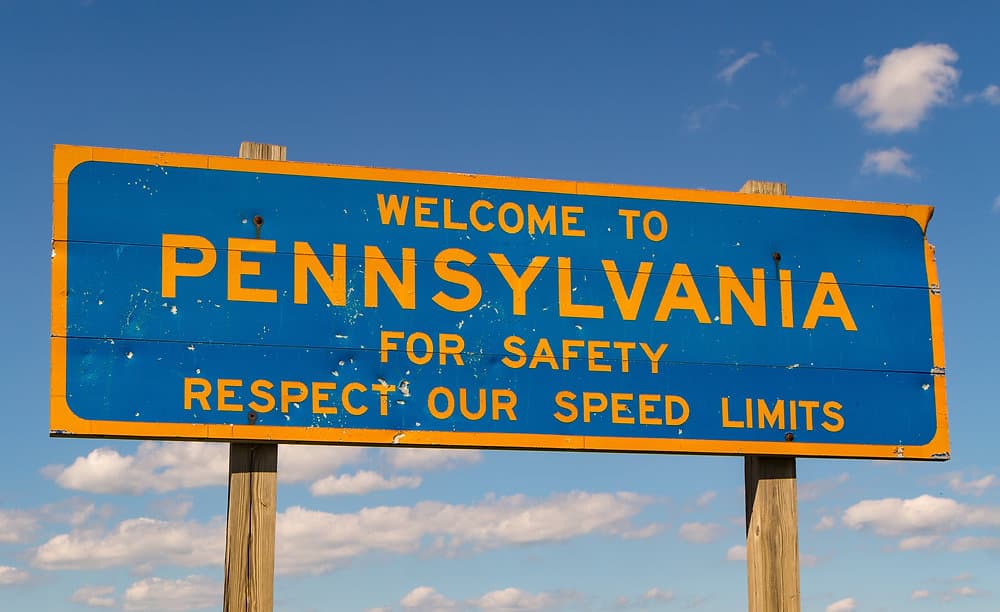
FMCSA Flags Pennsylvania for Non-Domiciled CDL Irregularities
FMCSA has once again turned its attention to state-level CDL practices, this time issuing a pointed preliminary determination of substantial noncompliance to the Commonwealth of Pennsylvania over how it has been issuing non-domiciled commercial learner’s permits (CLPs) and CDLs. The nine-page letter, dated November 19, 2025, reads as both a technical audit and a warning shot, signaling that the Agency’s scrutiny of lawful-presence verification and non-domiciled credentialing practices is expandi
Brandon Wiseman
Chameleon Carriers, Fraud Detection, and FMCSA’s Evolving Data Strategy
Chameleon carriers—trucking companies that shut down and quickly reopen under new identities to avoid regulatory enforcement—have posed a persistent challenge for federal regulators for more than a decade. These operators, often emerging with new names, DOT numbers, or corporate structures, can be difficult to distinguish from legitimate new entrants simply trying to begin operations. Yet the stakes are high. Reincarnated carriers have historically shown higher crash rates, and their ability to
 Rob Carpenter
Federal Court temporarily halts FMCSA’s non-domiciled CDL rule
In a major development with nationwide implications for motor carriers, foreign drivers, and state licensing agencies, the U.S. Court of Appeals for the D.C. Circuit has temporarily stayed the Federal Motor Carrier Safety Administration’s (FMCSA) controversial interim final rule (IFR) restricting the issuance of non-domiciled commercial driver’s licenses (CDLs). The court’s November 10, 2025 order halts the rule pending further judicial review, creating further uncertainty for the industry. Judg
Brandon Wiseman
FMCSA Tightens Rules for Non-Domiciled CDLs in Wake of Fatal Crashes
The Federal Motor Carrier Safety Administration (FMCSA) has issued an Interim Final Rule (IFR) to tighten the the rules governing the issuance of commercial learner’s permits (CLPs) and commercial driver’s licenses (CDLs) to individuals domiciled outside the United States. The rule, which takes effect immediately upon publication in the Federal Register, represents one of the most significant shifts in driver-credentialing policy in recent memory. FMCSA says the move is necessary to “restore int
Brandon Wiseman
FMCSA Proposes Pilot Programs for Hours of Service Flexibility
As announced previously by USDOT Secretary Sean Duffy as part of the agency's Pro-Trucker Initiatives, the Federal Motor Carrier Safety Administration is moving ahead with two new pilot programs. Sheduled for publication in the Federal Register on September 17, 2025, FMCSA is proposing two pilot programs aimed to address longstanding challenges faced by property-carrying truck drivers: unreasonable detention times at shippers and receivers, traffic congestion, and the rigid constraints of curren
Brandon Wiseman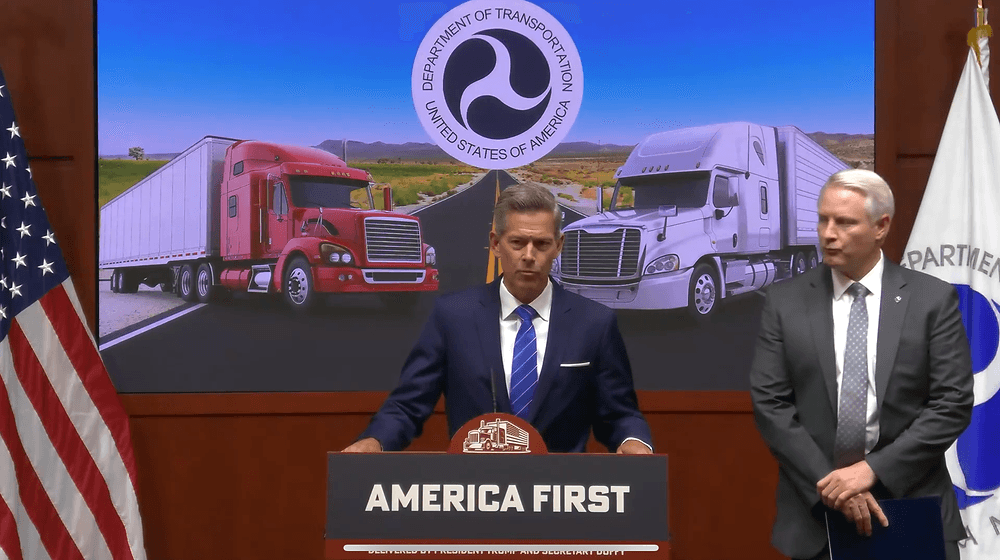
USDOT threatens to withhold federal funding from California, Washington & New Mexico for ELP enforcement non-compliance
In a bold move underscoring the Trump administration's commitment to enhancing trucking safety and enforcing federal regulations, U.S. Transportation Secretary Sean P. Duffy has issued a stern warning to three states: California, Washington, and New Mexico. On August 26, 2025, the U.S. Department of Transportation (USDOT) announced that these states risk losing millions in federal funding unless they immediately align with English Language Proficiency (ELP) requirements for commercial motor vehi
Brandon Wiseman
FMCSA Modifies Temporary Waiver for Paper Medical Certificates Amid NRII Transition
According to a notice published August 21, 2025, the Federal Motor Carrier Safety Administration (FMCSA) has modified its temporary waiver, allowing interstate commercial driver’s license (CDL) and commercial learner’s permit (CLP) holders, as well as motor carriers, to use paper Medical Examiner’s Certificates (MECs) as proof of medical certification for up to 60 days after issuance. This waiver, effective until October 12, 2025, addresses ongoing challenges in the transition to the National Re
Brandon WisemanNever Miss an Update
Get in-depth DOT compliance articles and breaking regulatory news delivered right to your inbox
Join thousands of safety professionals staying informed on DOT compliance