
DOT Compliance for Small vs. Large Fleets
In the U.S. trucking industry, fleet managers, regardless of fleet size, face a myriad of challenges to ensure their business remains compliant with USDOT regulations. However, the scope and scale of these challenges can differ significantly depending on the size and complexity of the fleet. In this article, we'll explore the key differences in DOT compliance between small and large fleets, identify common challenges, and provide practical strategies for each to stay compliant. The Basics of DOT
 Brandon Wiseman
Combating distracted driving & crafting an effective policy
Distracted driving is a major problem in the U.S., and its dangers are magnified in the trucking industry. It's no surprise that a commercial driver's inattention for even a few seconds can result in catastrophic accidents. For fleet managers, the stakes are high: distracted driving can lead to increased insurance premiums, legal liabilities, operational disruptions, and tragically, loss of life.In 2022, the National Highway Traffic Safety Administration (NHTSA) reported 3,308 deaths due to dist
Brandon Wiseman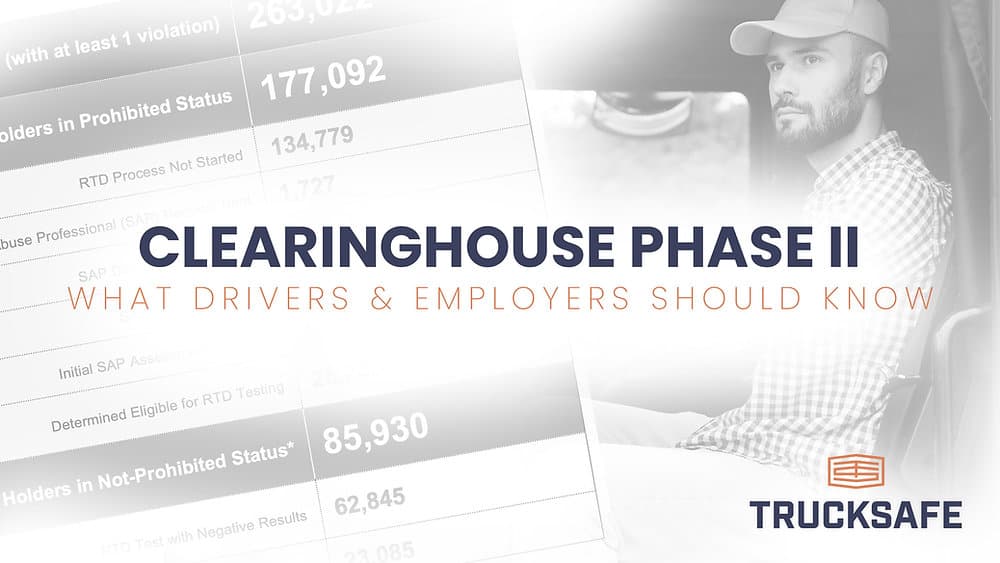
What You Need to Know About the Clearinghouse II Roll Out by FMCSA
In an effort to close gaps in federal drug & alcohol testing regulations, the Federal Motor Carrier Safety Administration (FMCSA) will soon roll out Clearinghouse Phase II—a significant change to the manner in which driver drug & alcohol violation data is accessed and utilized by State Driver's Licensing Agencies (SDLAs). BIG changes in store for the Drug & Alcohol Clearinghouse!Effective November 18, 2024, FMCSA, the federal agency charged with regulating the operation of commercial drivers an
Brandon Wiseman
Qualification considerations for multiple-employer drivers
In other articles, we've harped on the importance of thoroughly vetting commercial drivers. Missteps in the qualification process regularly contribute to high CSA scores, downgraded safety ratings, and nuclear verdicts. Part 391 of the Federal Motor Carrier Safety Regulations, and related state rules, lay out the steps regulated carriers must follow when qualifying new drivers. Driver applications, previous employer safety performance history requests, motor vehicle reports (MVRs), and road test
Brandon Wiseman
Understanding DOT road tests
Ensuring commercial drivers are properly qualified to operate heavy trucks or buses is a major part of complying with federal and state motor carrier safety regulations. That shouldn't come as a surprise since defects in drivers' qualifications routinely contribute to significant accidents. Indeed, Part 391 of the federal safety regulations contains dozens of rules carriers must follow before allowing an individual to operate a commercial vehicle on public highways. Things like pre-employment dr
Brandon Wiseman
FMCSA proposes revisions to various CDL processes
FMCSA is proposing several changes to its commercial driver's license (CDL) program to "enhance the flexibility and efficiency of the CDL program," according to a notice published in the Federal Register. The agency says it plans to remove "certain regulatory restrictions to allow applicants to obtain a CDL and be productively employed as a CMV driver in less time than it currently takes, without compromising safety." FMCSA believes the proposal will "further address CMV driver shortages, enhanc
Brandon Wiseman
FMCSA proposing to remove over 15,000 medical examiners from National Registry
FMCSA is proposing to remove over 15,000 medical examiners from its National Registry of Medical Examiners, according to a notice to be published in the Federal Register soon.In its notice, the FMCSA explains these examiners have not set up accounts through login.gov, the government-run multi-factor authentication site, and therefore are unable to "fulfill regulatory requirements such as reporting results of physical qualification examinations performed on commercial motor vehicle (CMV) drivers,
Brandon Wiseman
Trucksafe & Haul launch cutting-edge managed services offering
For today’s fleet managers, navigating the complex world of DOT regulations and ensuring fleet safety can feel like an uphill battle. But what if you could hand over the reins and focus on what you do best – running your business? That’s exactly what the groundbreaking partnership between Trucksafe Consulting, LLC and Haul, a cutting-edge AI-powered fleet risk management software provider, aims to achieve. Through this strategic alliance, Trucksafe expands its offerings with the launch of Trucks
Understanding FMCSA verifications of employment
Vetting commercial drivers to ensure they are properly qualified is one of the foundational regulatory obligations placed on motor carriers by federal and state safety regulations. As we've discussed in other articles, there's a lot that goes into qualifying drivers. But there's one aspect of driver qualification in particular that seems to cause quite a bit of confusion, and that's the so-called "verification of employment" or "safety performance history request" process. In this article, we br
Brandon WisemanNever Miss an Update
Get in-depth DOT compliance articles and breaking regulatory news delivered right to your inbox
Join thousands of safety professionals staying informed on DOT compliance