
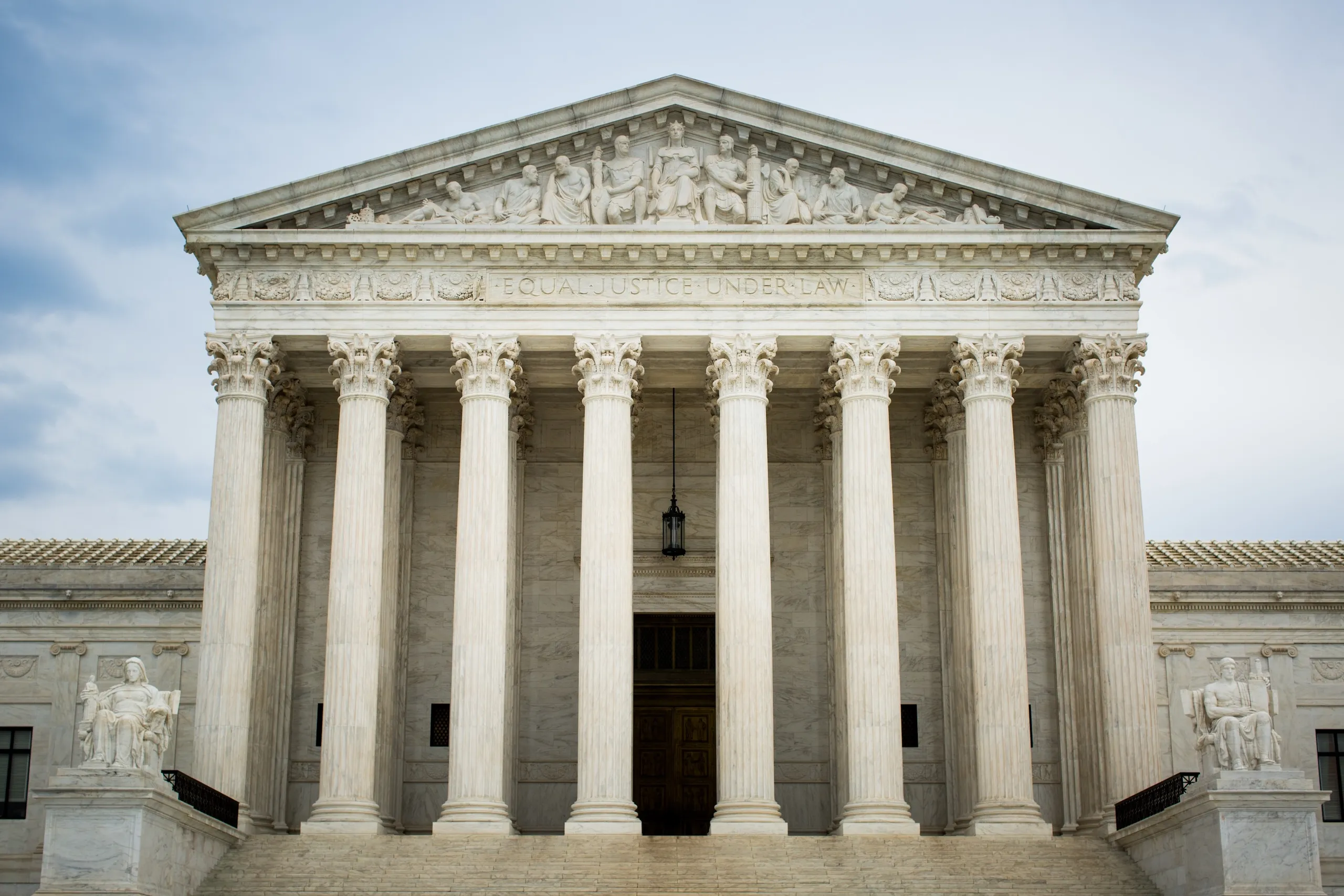
For most of the last three decades, a freight broker sued after a truck crash had a reliable way out in some jurisdictions. Federal law was read in much of the country to preempt state negligence claims tied to broker services, and those cases often ended on a motion to dismiss before anyone looked at how the carrier was chosen.
That defense is gone. On May 14, 2026, the U.S. Supreme Court ruled unanimously in Montgomery v. Caribe Transport II, LLC that negligent selection claims against brokers fall within the FAAAA's safety exception and are not preempted. About ten weeks later, a Dallas County jury returned a $604 million verdict in a case against C.H. Robinson, the largest broker in the country.
This guide is for brokers, shippers and the people inside those companies who choose carriers. It covers what changed, where broker exposure comes from, what the public carrier data can and cannot tell you, and why the record of your work matters as much as the work itself.
The pre-Montgomery world
In 1994, Congress passed the Federal Aviation Administration Authorization Act (FAAAA) as part of the broader deregulation of trucking. It preempts state laws "related to a price, route, or service" of motor carriers and brokers, so that interstate freight is not governed by fifty different rulebooks. It also contains a safety exception: preemption "shall not restrict the safety regulatory authority of a State with respect to motor vehicles."
The statute says nothing about negligent hiring claims against brokers, and the federal appeals courts split over whether those claims were preempted or saved by the safety exception. The Sixth and Ninth Circuits let them proceed. The Seventh and Eleventh Circuits held them preempted. The Seventh Circuit's 2023 decision in Ye v. GlobalTranz Enterprises became the go-to citation for brokers, and in roughly half the country a negligent selection claim could be dismissed at the outset.
Brokerage operations were built around that assumption. Vetting programs, where they existed, were often minimal, and the working view in the industry was that highway safety was the motor carrier's responsibility, not the broker's.
What Montgomery v. Caribe decided
In December 2017, Shawn Montgomery pulled onto the shoulder of Interstate 70 in Illinois with a mechanical problem. A tractor-trailer operated by Caribe Transport II, an Indiana carrier, left the roadway and struck his stopped vehicle. His injuries were severe enough that part of his leg was amputated. C.H. Robinson had brokered the load.
Montgomery sued C.H. Robinson for negligent hiring. His argument was simple: when C.H. Robinson selected Caribe, the carrier held a Conditional safety rating from FMCSA, based on documented deficiencies in areas including driver qualification, hours of service and crash rate. That information was public. The broker knew or should have known about it.
The trial court dismissed the claim on preemption grounds, relying on Ye, and the Seventh Circuit affirmed. The Supreme Court reversed, 9-0. Justice Barrett wrote for the Court that a negligent hiring claim does fall within the FAAAA's general preemption provision, but that the safety exception saves it. Requiring a broker to use ordinary care in selecting a carrier concerns the trucks that will carry the freight, so the claim is one "with respect to motor vehicles."
The Court rejected C.H. Robinson's main counterarguments. Reading the exception this way does not swallow preemption, because state laws touching broker prices, routes and services that have nothing to do with safety remain preempted. And while Justice Barrett acknowledged it is "not obvious" why Congress left a safety exception out of the separate provision governing intrastate broker services, she concluded it was "better to live with the mystery than to rewrite the statute."
Two weeks later, the Court declined to hear Total Quality Logistics v. Cox, a Sixth Circuit case presenting the same question, leaving in place a ruling that allowed negligent hiring claims against that broker to proceed.
What the decision did not do
Montgomery did not make brokers strictly liable for every crash involving a carrier they booked. The standard is ordinary care, the same standard that governs negligence cases generally. A plaintiff still has to prove that the broker failed to act as a reasonable broker would have in the same circumstances and that the failure contributed to the harm. That is a fact question for a jury.
Justice Kavanaugh, joined by Justice Alito, concurred. He wrote that the case was closer than the majority suggested, and he noted that Congress never required brokers to carry the kind of mandatory liability insurance it requires of motor carriers, which is what you might expect if Congress had anticipated this exposure. He still agreed with the result: the FAAAA was an economic deregulation statute, not a safety deregulation statute. "Truck safety," he wrote, "is a matter of life and death." And brokers that do the hard work of asking the right questions and hiring reputable carriers should still be able to win these cases.
Several questions remain open:
Intrastate freight. The safety exception sits in the interstate provision of the FAAAA. Claims arising from purely intrastate broker services stand on different statutory footing.
What "reasonable care" requires. The Court didn't hand down a checklist. What counts as reasonable will be shaped case by case, by juries and expert witnesses, and it will shift over time as cases are tried and industry practices develop.
Other liability theories. Vicarious liability and agency theories against brokers were not before the Court, and they are still a significant source of exposure.
Where broker exposure comes from
Most post-Montgomery commentary focuses on negligent selection, the claim that the broker should not have chosen this carrier, but that's not the only way brokers find themselves sideways in these cases.
There are two broad ways a broker ends up paying for a crash.
Negligent selection. The broker is liable for its own conduct in choosing the carrier. The questions are what the broker knew or should have known about the carrier at the time of selection, and whether a reasonable broker would have made the same choice. This is the claim Montgomery addressed.
Vicarious and agency liability. The broker is liable for the driver's or carrier's conduct because it exercised enough control over the work that the law treats the driver as its agent or employee. These claims look at what happened in transit: who dispatched, who tracked, who set appointment times, who told the driver what to do. Carrier vetting does nothing to reduce this exposure. A broker can choose a carrier with a clean record and still answer for the full loss if it controlled the load closely enough.
The C.H. Robinson verdict shows the difference. In Lipe v. Lupus Superior, tried in Dallas County, Texas, a Lupus Superior truck struck stopped traffic on Interstate 20 in Mississippi in 2021, killing three people. The jury assigned 45% of the fault to the driver, 32% to the carrier and 23% to C.H. Robinson. The jury also found that the driver was C.H. Robinson's "borrowed employee," a finding tied in part to the driver's use of the broker's app. A borrowed-employee finding can make the broker answer for the driver's share too, not just its own.
Selection matters. So does what your team does with a carrier and driver after the load is booked.
What the public data can tell you
Most of what a broker knows about a carrier comes from public FMCSA data. When information is publicly available, it is hard to argue you had no access to it. What you were obligated to do with it is a separate, fact-specific question, but the Montgomery claim itself was built on data anyone could have pulled.
The SAFER Company Snapshot. The starting point for almost every lookup. Some of what it shows is generated by FMCSA from real events: USDOT and MC numbers, the safety rating, inspection and crash counts. Much of the rest, including fleet size, driver count, mileage, addresses and cargo types, is self-reported by the carrier on its biennial MCS-150 and is not routinely audited. Mismatches between the self-reported data and reality (a phone number that rings to a different company, an address that is a mail drop, a mileage figure that cannot fit the reported fleet) are issues worth noticing.
Authority and insurance. FMCSA's Licensing & Insurance system shows authority history and insurance filings in more detail than SAFER. Authority status is a hard gate. Patterns of lapses, reinstatements and newly filed policies from unfamiliar insurers deserve a closer look.
Inspection and crash records. The roadside inspection and crash data behind the SAFER summary is public in the Safety Measurement System, down to individual inspections and violation codes. It shows whether a carrier's problems sit on the vehicle side (pointing to maintenance) or the driver side (pointing to hiring, training and hours of service), and out-of-service rates can be compared against national averages. That said, counts need context. The same number of violations means something very different for a five-truck carrier than for a five-hundred-truck carrier, and a crash on a carrier's record is not a finding of fault.
Safety ratings and the unrated majority
FMCSA assigns a safety rating only after a compliance review:
Satisfactory: the carrier had adequate safety management controls when reviewed.
Conditional: the carrier lacked adequate controls, and that led to serious violations. It can keep operating. This was Caribe's rating in Montgomery.
Unsatisfactory: the carrier is unfit, and a final Unsatisfactory rating triggers an order to stop operating.
Most carriers have no rating at all. FMCSA oversees over 800,000 active interstate carriers and, with its state partners, conducts roughly eleven or twelve thousand compliance reviews a year. As a result, roughly 95% of carriers are Unrated. Unrated is not a good rating or a bad rating. It is the absence of one, and it means you have to rely on other data instead.
A rating is also a snapshot of the carrier on the day of the review, which may have been many years ago. The Lipe case illustrates the gap: Lupus Superior held a Satisfactory rating while exceeding intervention thresholds in two SMS categories, which placed it on FMCSA's internal high-risk list. The public rating and the agency's own risk assessment pointed in opposite directions.
The CSA problem
CSA scores deserve their own caution, and two separate questions get blurred together.
The first is what the scores can tell you about a carrier. The research on whether SMS percentiles predict crash risk at the individual carrier level is weak, and both GAO and ATRI have questioned the methodology. Percentiles are relative, so a carrier's ranking can move without its performance changing. Data sufficiency rules leave many small carriers with no meaningful score, and FMCSA is working on a revised methodology that may change the categories and weights.
There is also a visibility problem. Since the FAST Act took effect in December 2015, BASIC percentiles for property carriers have been hidden from public view. The Crash Indicator and Hazardous Materials BASICs are hidden even at the measure level. Only the carrier and enforcement personnel can see the percentiles. Third-party tools that display "CSA scores" for property carriers are estimating them from the public data, with varying methods.
The second question is what happens when a plaintiff's lawyer puts the underlying data in front of a jury. Jurors are not asked to weigh GAO's critique of SMS methodology. They are shown that the inspection and violation history was public, that it pointed to a problem, and that the broker booked the load anyway.
Brokers have to hold both ideas at once. CSA data is a weak predictor of crashes, and it makes a strong exhibit at trial. The industry's call for a public high-risk carrier list sits uneasily alongside years of arguments that the underlying data is unreliable. Whatever role SMS data plays in your process, it is worth understanding both its limits and how it will read in discovery.
The record of your work
Without preemption, broker cases will often move into discovery. Plaintiffs will ask what information was available about the carrier at the time of selection, what process was followed to consider it, and whether that process can be shown. Expect requests for written carrier selection policies, onboarding files, approved and do-not-use lists, the history of loads given to the carrier, and the emails, texts and chat messages around the decision.
The vetting work happens at a moment in time. Afterward, the only thing left is the record. The data will have changed, and memories fade. A file that shows what was reviewed, what it showed, what was done about anything unusual and why the decision was made is far easier to explain than one that shows nothing. A casual chat message calling a carrier "sketchy but cheap" can become the headline of a deposition years later.
A gap between a written policy and what the team does in practice creates its own problem. The written policy is what gets pointed to when the process is scrutinized, and a standard the company set for itself and did not follow can be harder to defend than no written standard at all.
What reasonable care requires for any particular company is a question for its leadership and counsel. What's clear is that a team that understands the data, applies its process consistently and keeps an accurate record is in a far better position than one that does not.
Shippers
Shippers never had quite the same FAAAA defense brokers relied on, so negligent selection claims against shippers have been able to proceed in much of the country for years. Montgomery does not change the law for shippers as dramatically as it does for brokers. It does raise the level of attention on carrier selection across the whole supply chain, and plaintiffs' attorneys will look at every link. Shippers that select carriers directly, or choose brokers without asking how those brokers select carriers, should expect the same questions.
What happens next
More suits and more trials. Plaintiffs' firms held broker cases for years waiting on this decision. Those cases are being filed, and the ones that once ended on a motion to dismiss could be tried.
Changes in insurance. Contingent auto liability coverage for brokers will be repriced, and underwriters will ask more about selection processes and in-transit practices. The Lipe verdict landed near C.H. Robinson's coverage limits, which brokers carrying far less coverage will not miss.
A working definition of reasonable care, built in courtrooms. There is no federal standard for broker carrier selection. Industry frameworks, internal policies and expert testimony will fill that gap one trial at a time. Good carriers stand to benefit too, as freight shifts toward operations with records that hold up.
Building the skill on your team
The brokers and shippers that come through this period well will be the ones whose people understand what they are looking at: how to read a SAFER snapshot, what authority and insurance filings reveal, how to interpret inspection and crash records, what a safety rating does and does not mean, where CSA data helps and where it misleads, how to spot chameleon carriers, and how to document and escalate within their company's program.
Trucksafe's Carrier Safety & Compliance for Brokers & Shippers course covers all of it across 11 chapters and about 7 hours of video, taught by Brandon Wiseman, a transportation attorney and partner at Childress Law. It is built for carrier sales reps, compliance analysts, operations coordinators and logistics managers, and team pricing is available for organizations enrolling a whole department.
If you are a motor carrier wondering what this means for you, read our companion piece, What SCOTUS's Montgomery Decision Means for Carriers.
