
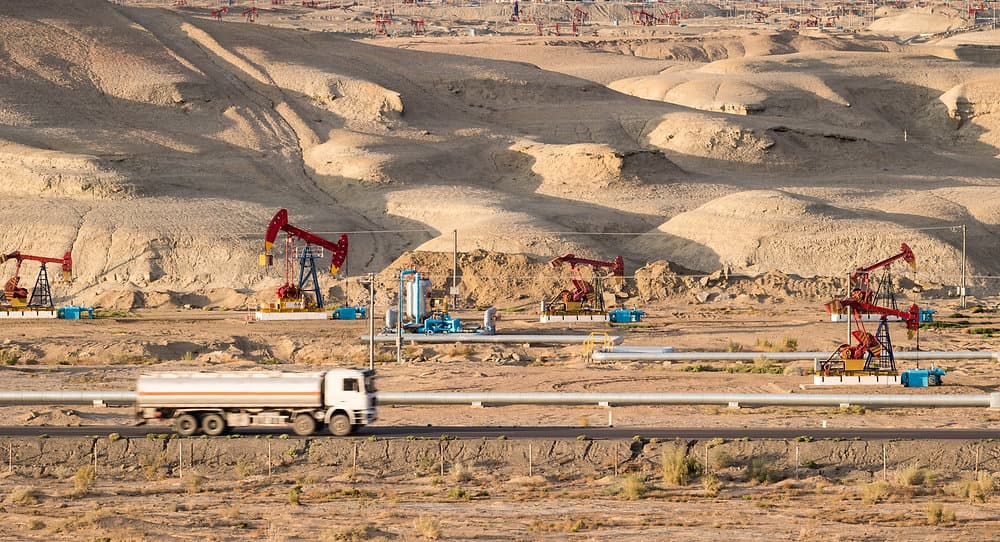
The Federal Motor Carrier Safety Regulations (FMCSRs) under 49 CFR 395.1(d) provide specific exemptions tailored for oilfield operations, commonly referred to as the "oilfield exemptions." These exemptions recognize the unique demands of the oil and gas industry and offer flexibility to drivers engaged in particular oilfield activities. This article delves into the two primary exemptions, detailing their applicability, offering practical usage tips, and highlighting potential pitfalls to avoid.
Understanding the Oilfield Exemptions
The FMCSRs outline two distinct exemptions under 49 CFR 395.1(d): (1) an eight-day reset of a driver's hours, and (2) a waiting time exemption. Both exemptions are intended to accommodate the unpredictable and demanding nature of oilfield operations, but they apply in different ways and to different types of drivers and vehicles.
The Eight-Day Period Reset Exemption (49 CFR 395.1(d)(1))
This exemption allows drivers transporting "oilfield equipment" to conclude any eight consecutive days with an off-duty period of 24 or more successive hours, effectively resetting their cumulative on-duty time.
Under standard FMCSA hours-of-service rules, a driver must take 34 consecutive hours off-duty to reset their weekly driving limit. The oilfield exemption reduces that requirement to just 24 hours, which provides additional flexibility to oilfield drivers who often operate under tight schedules.
To qualify for this exemption, drivers must be operating commercial motor vehicles (CMVs) exclusively for oilfield-related purposes. This includes transporting oilfield equipment, stringing and picking up pipeline pipes, and servicing natural gas and oil field operations. The regulations themselves do not define the term "oilfield equipment," for purposes of this particular exemption. However, the FMCSA has published the following regulatory guidance on the topic:
QUESTION: What is considered “oilfield equipment” for the purposes of 395.1(d)(1)?
ANSWER: Oilfield equipment is not specifically defined in this section. However, its meaning is broader than the “specially constructed” commercial motor vehicles referred to in §395.1(d)(2), and may encompass a spectrum of equipment ranging from an entire vehicle to hand–held devices.
Since the exemption is tied to the nature of the work being performed, it is essential for drivers and their employers to maintain detailed records to substantiate compliance. If a driver operates his CMV for a purpose other than oilfield work, then the normal HOS rules apply. To highlight this point, the FMCSA has issued the following guidance:
QUESTION: Are drivers required to be dedicated permanently to the oilfield industry, or must they exclusively transport oilfield equipment or service the field operations of the industry only for each eight–day (or shorter) period ended by an off–duty period of 24 or more consecutive hours?
ANSWER: A driver must exclusively transport oilfield equipment or service the field operations of the industry for each eight–day (or shorter) period before his/her off–duty period of 24 or more consecutive hours. However, he/she must be in full compliance with the requirements of 395.3(b) before driving other commercial motor vehicles not used to service the field operations of the natural gas or oil industry.
Additional FMCSA guidance states:
QUESTION: A driver is used exclusively to transport materials (such as sand or water) which are used exclusively to service the field operations of the natural gas or oil industry. Occasionally, the driver has leftover materials that must be transported back to a motor carrier facility or service depot. Would such a return trip be covered by §395.1(d)(1)?
ANSWER: Yes. Transporting excess materials back to a facility from the well site is part of the servicing operations. However, such servicing operations are limited to transportation back and forth between the service depot or motor carrier facility and the field site. Transportation of materials from one depot to another, from a railhead to a depot, or from a motor carrier terminal to a depot, is not considered to be in direct support of field operations.
One of the main benefits of this exemption is that it allows oilfield drivers to return to work sooner than they would under the standard hours-of-service rules. However, there are several challenges to be aware of. First, improper classification of a driver's activities can lead to violations if they are not genuinely engaged in exempted oilfield work. Second, ensuring that the full 24-hour off-duty period is taken is crucial. If a driver resumes work before the required break is completed, they risk non-compliance and potential penalties.
